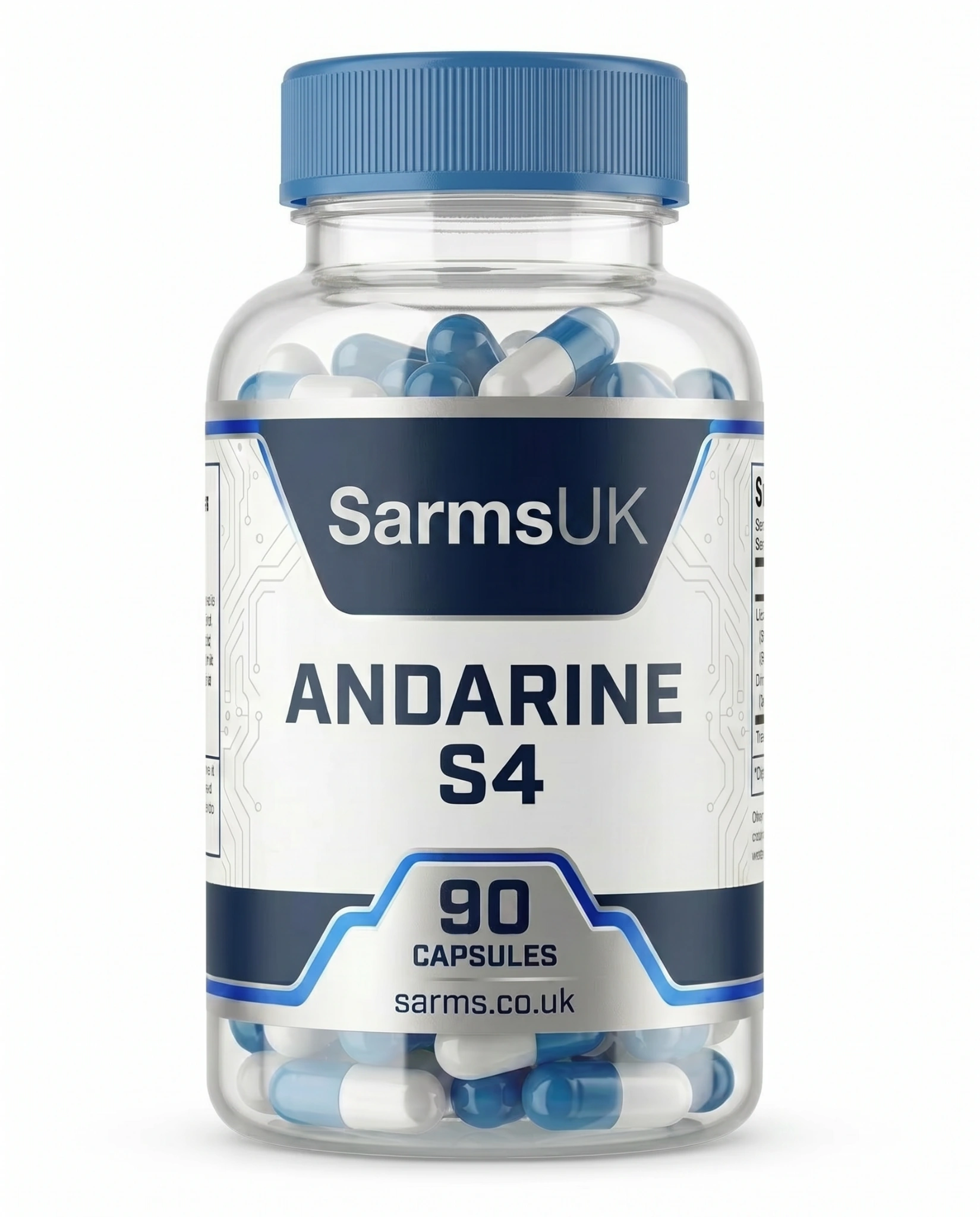
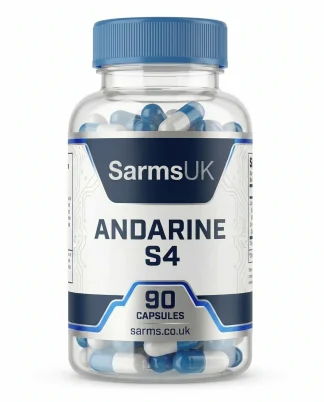
Buy Andarine (S4) UK from sarms.co.uk. Each S4 batch is quality checked and HPLC-tested to support consistent research use with reliable UK dispatch.
What Is Andarine S4?
Andarine, also known as S4 or GTx-007, is a non-steroidal selective androgen receptor modulator (SARM) originally developed by GTx Inc. for muscle wasting and osteoporosis research. It was one of the first SARMs to demonstrate genuine tissue-selective androgen receptor modulation in preclinical models, and it remains one of the most widely referenced compounds in the SARM research literature.
If you’re looking to buy Andarine S4 in the UK, sarms.co.uk supplies research-grade S4 SARM capsules with 99%+ HPLC-verified purity, full Certificates of Analysis, and free next-day UK delivery. Every batch is manufactured in GMP-certified UK facilities and independently tested by third-party laboratories. Whether you’re searching for Andarine S4 for sale, S4 SARM for sale UK, or the best place to buy S4 SARM online, our HPLC-tested Andarine meets the highest quality standards available.
What makes Andarine interesting from a research perspective is its position in the SARM landscape. It sits between the milder MK-2866 Ostarine (developed by the same company) and more potent compounds like RAD-140 Testolone. Its particular research appeal is the combination of lean tissue preservation with apparent fat oxidation effects in calorie-restricted conditions. That profile is why S4 keeps showing up in cutting and body recomposition research protocols despite being passed over for clinical trials in favour of Ostarine.
The compound also has one genuinely unique characteristic among SARMs: a dose-dependent visual side effect (yellow tint, reduced night adaptation) caused by off-target binding at retinal receptors. That side effect is the primary reason GTx chose Ostarine over Andarine for human trials. More on that below.
Compound Profile
| Chemical Name | (2S)-3-(4-acetamidophenoxy)-2-hydroxy-2-methyl-N-(4-nitro-3-trifluoromethylphenyl)propanamide |
| Other Names | GTx-007, Acetamidoxolutamide |
| CAS Number | 401900-40-1 |
| Molecular Formula | C₁₉H₁₈F₃N₃O₆ |
| Molecular Weight | 441.36 g/mol |
| Half-Life | ~4-6 hours (estimated from preclinical data) |
| Solubility | PEG-300 / DMSO |
| Classification | Non-steroidal SARM |
| Developer | GTx Inc. |
| PubChem CID | 9824562 |
How Does Andarine S4 Work? Mechanism of Action
Andarine works by binding selectively to androgen receptors in skeletal muscle and bone tissue. Once bound, it triggers anabolic gene transcription, the same downstream signalling cascade responsible for protein synthesis and nitrogen retention. The “selective” part matters: S4 activates receptors in muscle and bone while producing significantly less stimulation in the prostate, skin, and other androgen-sensitive tissues.
That tissue selectivity was demonstrated in the landmark Gao et al. (2005) study, which remains one of the most cited papers in the entire SARM field. In castrated rats, Andarine S4 maintained roughly 95% of levator ani muscle mass while stimulating the prostate to only about 30% of intact levels. For comparison, testosterone restored both muscle and prostate equally. That disparity is the entire proof-of-concept for why SARMs exist as a drug class.
No Aromatisation
Like all non-steroidal SARMs, Andarine does not convert to oestrogen via the aromatase enzyme. In research settings, this means no oestrogen-mediated water retention or gynecomastia risk at the compound level.
Fat Oxidation
Preclinical data suggests Andarine promotes fat oxidation alongside lean mass preservation. In animal models, S4 reduced body fat while maintaining or increasing lean tissue, even during calorie-restricted conditions. This dual action is why Andarine S4 for cutting research is one of its most common applications, and why it frequently appears in body recomposition protocols.
Bone Mineral Density
Kearbey et al. (2007) showed that Andarine increased bone mineral density and whole-bone mechanical strength in ovariectomised rats (a standard model for postmenopausal osteoporosis). Effects were dose-dependent and comparable to DHT, without significant uterotrophic activity (PMID: 17368613).
The Vision Effect: What Actually Happens
Andarine’s most distinctive characteristic is its dose-dependent visual side effect. At higher research doses, S4 has been reported to cause a yellow tint to vision and difficulty adjusting from light to dark environments. This happens because the S4 molecule is structurally similar enough to bind (weakly) to retinal receptors in the eye, not just androgen receptors in muscle.
The effect is fully reversible. It clears within days of dose reduction or cessation. No permanent retinal damage has been documented in any published research. The mechanism is off-target binding, not toxicity. Still, it’s the main reason GTx shelved Andarine in favour of Ostarine for human clinical development, and it’s a genuine consideration for any researcher working with this compound.
Published Research on Andarine S4
Andarine has a solid preclinical evidence base. No human clinical trials have been published, but the animal data is extensive and well-characterised. Here’s what the actual research shows:
Muscle Preservation and Prostate Selectivity
Gao et al. (2005) conducted the definitive tissue-selectivity study. In castrated rats, Andarine S4 at 3 mg/kg/day restored muscle mass to approximately 95% of intact control levels while stimulating the prostate to only 30% of intact levels. Testosterone, by comparison, restored both equally. This study established S4 as a legitimate proof-of-concept for tissue-selective androgen receptor modulation and remains one of the foundational papers in SARM pharmacology (PMID: 15890747).
Bone Density in Osteoporosis Model
Kearbey et al. (2007) investigated Andarine in ovariectomised rats over 120 days. At both 3 mg/kg/day and 10 mg/kg/day, S4 significantly increased bone mineral density and whole-bone mechanical strength. The effects were comparable to dihydrotestosterone (DHT) treatment, but without the uterotrophic (uterine growth) activity that limits DHT’s clinical use. This is relevant to osteoporosis research, where the goal is bone protection without unwanted hormonal effects (PMID: 17368613).
SARM Class Review: Where Andarine Fits
Narayanan et al. (2018) published a comprehensive review of SARMs as function-promoting therapies. The paper positions Andarine as a well-characterised first-generation SARM with demonstrated tissue selectivity, noting its role in establishing the pharmacological principles that later compounds (including Ostarine and LGD-4033) were built upon (PMID: 29528862).
Doping Detection
Thevis et al. (2010) characterised the metabolic pathways of Andarine S4 for anti-doping purposes. The study identified hydroxylated and deacetylated metabolites as primary detection targets in urine, confirming Andarine’s status as a WADA-prohibited substance. This is worth noting for any research context where regulatory compliance matters (PMID: 20872895).
What’s Missing from the Literature
No human clinical trials. No human pharmacokinetic data. The half-life estimate of 4-6 hours comes from animal models. The vision side effect mechanism is inferred from structural analysis, not formally characterised in a dedicated ophthalmological study. GTx chose to advance Ostarine (which doesn’t produce vision effects) into human trials instead, so the human data gap for Andarine is unlikely to close any time soon.
⚠️ Important: Andarine S4 has no human clinical trial data and no regulatory approval for any indication. All efficacy and safety data comes from preclinical (animal and in vitro) studies. This compound is sold for research purposes only.
Andarine S4 vs Other SARMs: How Does It Compare?
If you’re researching Andarine, you’re probably weighing it against other SARMs. Here’s an honest comparison based on published evidence:
| Factor | Andarine S4 | Ostarine MK-2866 | RAD-140 Testolone | Cardarine GW-501516 |
|---|---|---|---|---|
| Compound class | Non-steroidal SARM | Non-steroidal SARM | Non-steroidal SARM | PPARδ agonist (not a SARM) |
| Anabolic potency | Moderate | Moderate | High | N/A (no AR binding) |
| Human clinical trials | None | Phase II & III completed | None completed | None completed |
| Vision side effects | Yes (dose-dependent, reversible) | None | None | None |
| Half-life | ~4-6 hours | ~24 hours | ~60 hours | ~16-24 hours |
| Primary research use | Cutting, recomposition | Lean mass, joints, bone | Lean mass, strength | Endurance, fat metabolism |
| Fat oxidation | Suggested in preclinical | Not primary effect | Not primary effect | Primary mechanism |
| HPTA suppression | Mild to moderate | Mild to moderate | Likely dose-dependent | None (no AR activity) |
| Split dosing needed | Yes (short half-life) | No | No | No |
Andarine vs Ostarine
Both were developed by GTx Inc. Ostarine was taken into human clinical trials; Andarine was not, primarily because of the vision side effect. In preclinical models, Andarine showed stronger fat oxidation effects, while Ostarine demonstrated broader clinical utility including bone and connective tissue benefits supported by Phase II and Phase III human data. If clinical validation matters to your research, Ostarine MK-2866 has substantially more supporting evidence.
Andarine vs RAD-140
RAD-140 is generally considered more potent on a mg-for-mg basis, with an estimated anabolic-to-androgenic ratio of 90:1. Andarine is milder, but its reported fat oxidation properties give it a different research profile. RAD-140 Testolone is typically studied for lean mass and strength applications, while Andarine S4 is more commonly associated with cutting and recomposition protocols.
Andarine vs Cardarine
Cardarine GW-501516 is not a SARM at all. It’s a PPARδ agonist that works through an entirely different pathway. Cardarine doesn’t bind to androgen receptors, doesn’t affect testosterone, and doesn’t require PCT. The two compounds are frequently studied together because Cardarine’s fat metabolism and endurance effects complement Andarine’s lean mass preservation during calorie restriction.
Andarine S4 Dosage and Administration (Research Use Only)
No human clinical trials have established dosing protocols for Andarine S4. All dosage references below come from preclinical data and published research:
- Human clinical trial dosages: None. No human trials have been conducted with this compound.
- Preclinical effective range: 3-10 mg/kg/day in rat models (Gao et al., 2005; Kearbey et al., 2007)
- Commonly referenced research dosages: 25-50 mg per day
- Andarine S4 half-life: Approximately 4-6 hours (estimated from preclinical pharmacokinetic data)
- Split dosing: The short Andarine S4 half-life means split dosing (2-3 times daily) is generally recommended to maintain stable plasma concentrations
- Andarine S4 cycle length: 8-12 weeks is the most commonly referenced research duration
- Administration: Oral capsule
A note on the vision effect and dosage: The visual side effect (yellow tint, reduced dark adaptation) is dose-dependent. Lower doses are less likely to produce it. Some researchers employ 5-days-on, 2-days-off protocols specifically to mitigate this effect, though this approach has no published validation.
Does Andarine S4 Require PCT?
Andarine causes mild to moderate suppression of the hypothalamic-pituitary-testicular axis (HPTA), depending on dose and cycle duration. The degree of suppression appears to be lower than more potent SARMs like RAD-140 or LGD-4033, but it is not zero.
Whether Andarine S4 needs PCT depends on the research protocol. At lower doses and shorter cycles, hormonal recovery may occur naturally. At higher doses or extended durations, some degree of post-cycle support is commonly included in research designs. There is no published human data establishing PCT requirements for Andarine specifically.
Andarine S4 Stacking: Common Research Combinations
Andarine is frequently studied in combination with other compounds. The most common research stacks include:
Andarine and Cardarine Stack
The most popular cutting stack in research settings. Cardarine GW-501516 provides PPARδ-mediated fat oxidation and endurance support, while Andarine contributes lean tissue preservation through androgen receptor activation. The two compounds work through completely different mechanisms, which is the logic behind combining them.
Andarine and Ostarine Stack
A recomposition stack combining two GTx-developed compounds. Ostarine MK-2866 provides well-characterised lean mass and connective tissue support, while Andarine adds its fat oxidation properties. Both are considered moderate-potency SARMs.
Andarine and MK-677 Stack
MK-677 Ibutamoren is a growth hormone secretagogue that doesn’t interact with the androgen receptor at all. It’s sometimes included alongside Andarine for its sleep quality and recovery effects via the GH/IGF-1 axis. MK-677 doesn’t cause HPTA suppression, so it doesn’t compound that variable in stack research.
Triple Stacks
Some research protocols combine Andarine with both Cardarine and Ostarine, or Andarine with Cardarine and MK-677. These multi-compound protocols add complexity and make it harder to attribute effects to any single compound, which is a limitation worth noting in any research design.
Andarine S4 for Women: Research Considerations
Andarine’s moderate potency and tissue selectivity have made it a compound of interest in female research models. The Kearbey et al. (2007) ovariectomised rat study is directly relevant here, as it demonstrated bone-protective effects without significant uterotrophic activity.
As a SARM, Andarine carries a lower risk of virilisation effects compared to testosterone or traditional anabolic steroids, though “lower risk” is not the same as “no risk.” No human data exists to characterise S4’s effects in women specifically. Research involving female subjects should account for the compound’s androgenic properties, however mild they may be relative to testosterone.
Can Andarine S4 Be Used for Bulking?
Andarine is not typically the first choice for bulking research. Its primary preclinical profile favours lean mass preservation and fat reduction rather than raw mass gain. Compounds like RAD-140 or LGD-4033 Ligandrol are more commonly associated with lean mass accretion in research settings.
That said, the Gao et al. (2005) data showed S4 maintaining 95% of muscle mass in a castrated model, which demonstrates genuine anabolic capability. The distinction is that Andarine’s research profile skews more toward preservation and recomposition than aggressive tissue growth. Researchers interested in Andarine S4 for bulking typically combine it with more potent compounds rather than using it as a standalone.
Who’s Researching Andarine S4?
- Body recomposition researchers studying lean mass preservation during calorie restriction, where Andarine’s dual effects on muscle and fat are most relevant
- Cutting protocol researchers investigating fat oxidation alongside tissue-selective anabolic activity
- Osteoporosis researchers exploring bone mineral density effects demonstrated in the Kearbey et al. (2007) ovariectomised rat model
- Muscle wasting researchers building on the Gao et al. (2005) castrated rat data showing 95% muscle mass preservation
- SARM pharmacology researchers using Andarine as a reference compound, given its well-characterised tissue-selectivity profile
- Stack researchers combining Andarine with Cardarine, Ostarine, or MK-677 in multi-compound protocols
Why Buy Andarine S4 from sarms.co.uk?
Purity You Can Verify
Every batch of Andarine S4 is independently tested via High-Performance Liquid Chromatography (HPLC) by accredited third-party laboratories. We publish full Certificates of Analysis for every batch. Download the PDF directly from this page and verify with the testing lab independently.
Proper Concentration
25 mg per capsule, 90 capsules per bottle. No underdosed products, no proprietary blends, no ambiguity. You know exactly what you’re getting and can calculate research dosages with precision.
UK Manufactured
Compounded in GMP-certified UK facilities. Not imported from unregulated overseas laboratories. Raw materials are tested before compounding. Finished products are tested after compounding. Two-stage quality control with full documentation.
Capsules, Not Liquid
We sell Andarine S4 capsules, not liquid solutions. Capsules offer consistent dosing, longer shelf stability, and easier handling compared to Andarine S4 liquid formulations that require volumetric measurement and degrade faster once opened.
Free Next-Day UK Delivery
All orders ship free with next-day UK delivery. No minimum order, no hidden shipping fees.
Storage and Handling
- Store at room temperature (15-25°C) in a cool, dry place
- Keep away from direct sunlight and moisture
- Keep the container tightly sealed after each use
- Keep out of reach of children
- Do not use past the expiry date printed on the label
- Shelf life: 24 months when stored correctly
Frequently Asked Questions About Andarine S4
What is Andarine S4?
Andarine S4 (also called GTx-007) is a non-steroidal selective androgen receptor modulator (SARM) developed by GTx Inc. for research into muscle wasting and osteoporosis. It selectively binds to androgen receptors in muscle and bone tissue while producing reduced effects in other tissues like the prostate.
Does Andarine S4 cause vision problems?
At higher research doses, Andarine has been reported to cause a yellow tint to vision and difficulty adjusting from light to dark. This is caused by off-target binding at retinal receptors and is fully reversible upon dose reduction or cessation. No permanent vision damage has been documented in published research.
Is Andarine S4 good for cutting?
Andarine is one of the most commonly studied SARMs for cutting and body recomposition research. Preclinical data suggests it preserves lean tissue while promoting fat oxidation during calorie restriction, which is why it appears frequently in cutting protocol research.
How does Andarine compare to Ostarine?
Both were developed by GTx Inc. Ostarine was advanced into Phase II and Phase III human clinical trials while Andarine was not, primarily due to S4’s vision side effect. Ostarine has substantially more clinical validation. Andarine is more commonly associated with cutting research due to its fat oxidation properties.
What is the Andarine S4 half-life?
Approximately 4-6 hours based on preclinical pharmacokinetic data. This is significantly shorter than most other SARMs (Ostarine ~24 hours, RAD-140 ~60 hours), which is why split dosing 2-3 times daily is generally recommended for stable plasma levels.
Does Andarine S4 need PCT?
Andarine causes mild to moderate HPTA suppression depending on dose and duration. At lower doses and shorter cycles, natural recovery may be sufficient. At higher doses or longer durations, some form of post-cycle support is commonly included in research protocols. No human data exists to establish specific PCT requirements.
Can you stack Andarine S4 with Cardarine?
An Andarine and Cardarine stack is one of the most common cutting combinations in research settings. The two compounds work through completely different mechanisms (androgen receptor vs PPARδ), which is the rationale for combining them.
Is Andarine suitable for women?
Andarine’s moderate potency and tissue selectivity have made it a compound of interest in female research models. Preclinical data in ovariectomised rats showed bone-protective effects without significant uterotrophic activity. However, no human data exists for Andarine in women, and its androgenic properties (however mild) should be considered.
Is Andarine S4 legal in the UK?
Andarine is legal to purchase in the UK for research purposes. It is not approved for human consumption by the MHRA. It is prohibited by WADA and cannot be used in competitive sport.
Why does Andarine have a short half-life?
The 4-6 hour half-life is a property of Andarine’s molecular structure and how rapidly it’s metabolised. This is shorter than most other SARMs and means split dosing is needed for stable levels. It’s also why newer SARMs were designed with longer half-lives for once-daily administration.
Andarine S4 capsules vs liquid: which is better?
Capsules provide consistent per-dose accuracy and longer shelf stability. Liquid formulations require precise volumetric measurement and degrade faster once opened. For research requiring repeatable dosing, capsules are generally preferred.
What results can Andarine S4 produce?
In preclinical models, Andarine S4 maintained approximately 95% of muscle mass in castrated rats (Gao et al., 2005) and increased bone mineral density in ovariectomised rats (Kearbey et al., 2007). It also reduced body fat in animal models during calorie restriction. No human trial results exist for Andarine.
Related SARMs and Research Compounds
- MK-2866 Ostarine (Enobosarm) – the most clinically studied SARM, developed by the same company as Andarine, with Phase II and III human trial data
- RAD-140 Testolone – a more potent SARM with a 90:1 anabolic-to-androgenic ratio, commonly studied for lean mass and strength
- Cardarine GW-501516 (Endurobol) – a PPARδ agonist frequently combined with Andarine in cutting research protocols
- MK-677 Ibutamoren – a growth hormone secretagogue sometimes stacked with Andarine for recovery and sleep quality support
- LGD-4033 Ligandrol – another potent SARM more commonly associated with lean mass accretion than cutting
- SR-9009 Stenabolic – a Rev-Erbα agonist studied for metabolic and circadian rhythm effects
- YK-11 – a steroidal SARM with myostatin-inhibiting properties, structurally distinct from non-steroidal SARMs like Andarine
References and Further Reading
- Gao W, et al. (2005). “Selective androgen receptor modulator treatment improves muscle strength and body composition and prevents bone loss in orchidectomized rats.” Endocrinology, 146(11), 4887-4897. PMID: 15890747
- Kearbey JD, et al. (2007). “Selective Androgen Receptor Modulator (SARM) treatment prevents bone loss and reduces body fat in ovariectomized rats.” Pharmaceutical Research, 24(2), 328-335. PMID: 17368613
- Narayanan R, et al. (2018). “Selective Androgen Receptor Modulators (SARMs) as Function Promoting Therapies.” Current Opinion in Clinical Nutrition and Metabolic Care, 21(3), 233-237. PMID: 29528862
- Thevis M, et al. (2010). “Mass spectrometric characterization of urinary metabolites of the selective androgen receptor modulator andarine (S-4) for routine doping control purposes.” Rapid Communications in Mass Spectrometry, 24(15), 2245-2254. PMID: 20872895
Disclaimers
- Andarine (S4) is sold strictly for laboratory and research purposes only
- This product is not intended for human consumption
- Andarine is not a medicine, supplement, or food product
- No human clinical trials have been conducted with this compound
- Vision-related effects have been reported at higher doses and are dose-dependent and reversible
- Not suitable for individuals under 18 years of age
- Pregnant or breastfeeding women must not handle this compound
- Researchers should consult qualified professionals and adhere to all applicable regulations
- sarms.co.uk does not provide medical advice and makes no claims regarding therapeutic outcomes
- We are not responsible for any adverse effects resulting from misuse of this product
- The content on this page does not constitute medical advice
Content last reviewed: 17 February 2026
Research FAQ
- What is Andarine (S4) commonly researched for?
Andarine is often studied in recomposition and androgen-receptor selectivity-focused research frameworks.
- How is S4 product quality verified?
S4 stock is reviewed via batch controls and HPLC-based purity checks before release.
- Where does S4 fit in stack planning?
It is typically considered in recomposition-focused stack structures where protocol balance is important.


Reviews
There are no reviews yet