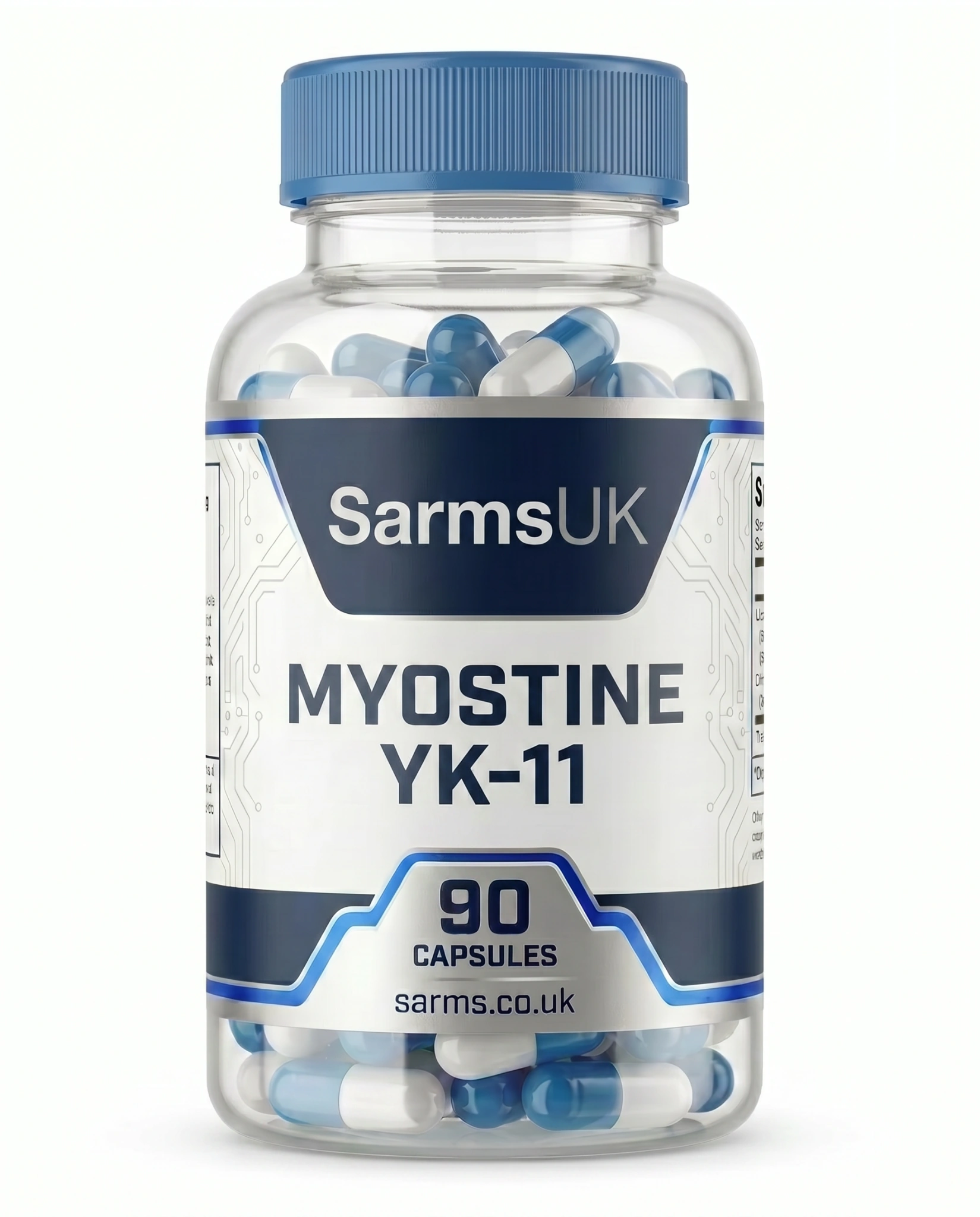
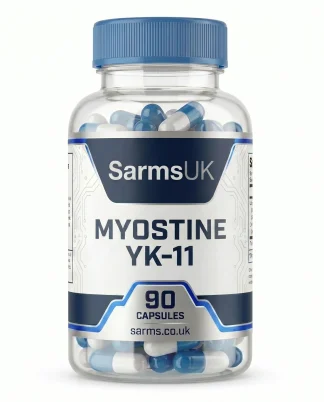
What Is YK-11?

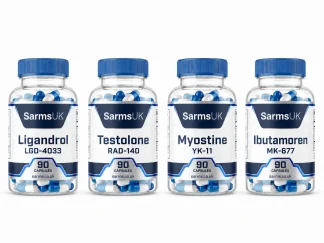
YK-11, also marketed as Myostine, is one of the most unusual compounds in the SARM category. Its classification is genuinely debated: YK-11 is a steroidal SARM with myostatin-inhibiting properties, which makes it fundamentally different from non-steroidal SARMs like RAD-140, Ostarine, or LGD-4033. No other compound sold as a SARM has this dual mechanism.

If you’re looking to buy YK-11 in the UK, sarms.co.uk supplies research-grade Myostine YK-11 capsules with 99%+ HPLC-verified purity, full Certificates of Analysis, and free next-day UK delivery. Every batch is manufactured in GMP-certified UK facilities and independently tested by third-party laboratories. Whether you’re searching for YK-11 for sale, YK-11 SARM for sale UK, or the best place to buy YK-11 Myostine online, our HPLC-tested product meets the highest quality standards available for this compound.

Discovered by Japanese researcher Yuichiro Kanno at Toho University in 2011, YK-11 was identified as a partial agonist of the androgen receptor that also induces follistatin expression. Follistatin is a natural antagonist of myostatin, the protein that limits how much muscle tissue the body can build. That dual mechanism (AR partial agonism combined with myostatin inhibition via follistatin) is unique among compounds sold as SARMs.

The critical caveat that researchers need to understand upfront: YK-11 has no human clinical trial data. All published research is in vitro (cell-based). There are no animal studies and no human pharmacokinetic or safety data. Everything beyond the cell studies is extrapolation. This represents the largest evidence gap of any SARM-category compound we sell, and YK-11 results in living organisms remain completely uncharacterised in the published literature.

Compound Profile

Chemical Name (17α,20E)-17,20-[(1-methoxyethylidene)bis(oxy)]-3-oxo-19-norpregna-4,20-diene-21-carboxylic acid methyl ester
Other Names Myostine
CAS Number 1370003-76-1
Molecular Formula C₂₅H₃₄O₆
Molecular Weight 430.54 g/mol
Half-Life ~6-10 hours (estimated; no human PK data exists)
Solubility PEG-300 / DMSO
Classification Steroidal SARM / Myostatin Inhibitor (debated)
Developer Yuichiro Kanno (Toho University, Japan)
PubChem CID 119058028

How Does YK-11 Work? Mechanism of Action

YK-11 has a dual mechanism of action that sets it apart from every other compound in the SARM category. Understanding how these two pathways interact is central to understanding what makes this compound unique in research contexts.

Partial Androgen Receptor Agonism

YK-11 binds to the androgen receptor as a partial agonist, meaning it activates the receptor but not to the same degree as a full agonist like testosterone or DHT. Kanno et al. (2011) demonstrated that YK-11 induced myogenic differentiation in C2C12 cells (a mouse muscle cell line) through AR-mediated signalling. The partial agonist profile means YK-11 activates some but not all androgen-dependent pathways, which has implications for both its potential effects and its side effect profile (PMID: 21372378).

Follistatin Induction and YK-11 Myostatin Inhibition

This is what makes YK-11 genuinely unique among SARMs. Kanno et al. (2013) showed that YK-11 significantly increased follistatin expression in C2C12 cells via a PKC-dependent pathway. Follistatin is a natural antagonist of myostatin, the protein that acts as a biological brake on muscle growth. By increasing follistatin, YK-11 theoretically reduces or removes the myostatin ceiling on muscle tissue accumulation. This follistatin-mediated myostatin inhibition is an independent mechanism from the androgen receptor activation and is the primary reason YK-11 generates so much research interest (PMID: 23995658).

Steroidal Structure

Unlike non-steroidal SARMs (RAD-140, Ostarine, LGD-4033, Andarine), YK-11 has a steroidal backbone. Its structure is derived from 5α-dihydrotestosterone (DHT). This is significant because it means YK-11 may have pharmacological properties more similar to anabolic steroids than to other SARMs, despite being marketed alongside them. The steroidal structure also raises theoretical questions about hepatotoxicity that have not been investigated in any published study.

Potential Osteogenic Effects

The second Kanno et al. paper (2013) also investigated YK-11’s effects on MC3T3-E1 osteoblast cells, demonstrating enhanced proliferation and differentiation. This suggests potential bone-building properties beyond the muscle effects, though again, this data is exclusively in vitro. No animal bone density studies exist for YK-11.

The Evidence Gap

All of the above comes from in vitro cell studies by a single research group. There are no published animal studies, no human pharmacokinetic data, no safety profiles, and no clinical trials. The YK-11 myostatin inhibition effect has never been confirmed in a living organism. Researchers should weight their protocols accordingly.

Published Research on YK-11 (Myostine)

The published research on YK-11 is limited to two key cell-based studies from the same research group at Toho University in Japan. This is an unusually thin evidence base compared to other SARM-category compounds.

Myogenic Differentiation (In Vitro, 2011)

Kanno et al. (2011) published the initial characterisation of YK-11 in Biological and Pharmaceutical Bulletin. The study demonstrated that YK-11 selectively activated androgen receptor-mediated signalling in C2C12 mouse muscle cells, promoting myogenic differentiation at concentrations comparable to DHT. The compound showed partial agonist activity, activating some but not all AR-dependent pathways. This was the first paper to identify YK-11 as a selective androgen receptor modulator (PMID: 21372378).

Follistatin Expression and Osteoblastic Effects (In Vitro, 2013)

Kanno et al. (2013) followed up with a study showing that YK-11 induced follistatin expression in C2C12 cells via a PKC-dependent pathway. This follistatin increase was associated with enhanced myogenic differentiation beyond what AR activation alone would produce, suggesting the myostatin-inhibiting effect is an independent mechanism. The same paper demonstrated osteoblastic proliferation and differentiation in MC3T3-E1 cells, hinting at potential bone-building applications (PMID: 23995658).

What the Literature Does Not Tell Us

  • No animal studies: We do not know if the cell-based effects translate to whole organisms. C2C12 myoblast results do not necessarily predict muscle growth in vivo.
  • No human pharmacokinetic data: The YK-11 half-life estimate of 6-10 hours is derived from structural analysis, not from measured plasma concentrations in any species.
  • No safety data: Hepatotoxicity, hormonal suppression severity, cardiovascular effects, and long-term consequences are completely unknown.
  • No efficacy data in vivo: The myostatin-inhibiting effect has never been confirmed outside of cell cultures. Follistatin induction in a petri dish does not guarantee the same mechanism operates systemically.
  • Single research group: Both papers come from the same laboratory. The findings have not been independently replicated by other researchers.

⚠️ Important: YK-11 has NO human clinical data, no animal data, and no regulatory approval for any indication. Its safety profile is completely unknown. It is sold for research purposes only.

YK-11 vs Other SARMs: How Does It Compare?

YK-11’s position in the SARM landscape is unique. The comparison table below highlights why researchers either find it the most interesting or the most concerning compound in this category, depending on how much weight they place on evidence quality versus theoretical potential.

Factor YK-11 LGD-4033 Ligandrol RAD-140 Testolone MK-2866 Ostarine
Chemical class Steroidal Non-steroidal Non-steroidal Non-steroidal
AR activity Partial agonist Full agonist Full agonist Full agonist
Myostatin inhibition Demonstrated in vitro None None None
Human clinical trials None Phase I completed None completed Phase II & III completed
Animal studies None published Yes Yes Yes
Evidence quality In vitro only (2 studies) Phase I human data Preclinical + limited human Phase II/III human data
HPTA suppression Unknown (likely, given steroidal structure) Moderate, reversible Likely dose-dependent Mild to moderate
Liver concerns Unknown (steroidal backbone suggests possible) No signals in Phase I Limited data No signals in trials
Primary research use Bulking, myostatin research Lean mass, bone density Lean mass, strength Lean mass, joints, bone

YK-11 vs RAD-140

RAD-140 Testolone is a non-steroidal SARM with a well-characterised 90:1 anabolic-to-androgenic ratio and published preclinical data including animal studies. YK-11 has a theoretically more powerful mechanism (myostatin inhibition on top of AR activation), but zero in vivo evidence to back it up. RAD-140 is generally studied for lean mass and strength. Researchers comparing YK-11 vs RAD-140 are essentially weighing theoretical ceiling versus evidence quality.

YK-11 vs LGD-4033

LGD-4033 Ligandrol is the only SARM-category compound with published Phase I human data showing measurable lean mass gains (1.21 kg in 21 days at 1 mg/day). YK-11 has neither animal nor human data. LGD-4033 is non-steroidal with a known suppression profile and no liver signals at clinical doses. Researchers comparing YK-11 vs LGD-4033 should note that LGD-4033 provides validated data while YK-11 provides speculative potential.

YK-11 vs Follistatin 344

Some researchers compare YK-11 to injectable follistatin 344, since both target the myostatin pathway. The key difference is mechanism: YK-11 induces the body’s own follistatin production (demonstrated in vitro only), while follistatin 344 is exogenous administration of the protein itself. Follistatin 344 is typically injectable, expensive, and has its own stability and dosing challenges. YK-11 offers oral administration as a potential advantage, but its follistatin-inducing effect has not been confirmed in vivo.

YK-11 Dosage and Administration (Research Use Only)

There are no published clinical or animal studies establishing dosing for YK-11. This is the most important thing to understand about YK-11 dosage: every number you encounter is extrapolated or anecdotal. No controlled research has established effective or safe doses in any species.

  • Clinical trial dosages: None. No human trials have been conducted with YK-11.
  • Animal study dosages: None. No animal studies have been published.
  • Commonly referenced research dosages: 5-10 mg per day
  • YK-11 half-life: Approximately 6-10 hours (estimated from structural analysis, not measured in any species)
  • Split dosing: The short estimated YK-11 half-life suggests that split dosing (twice daily) may maintain more stable plasma concentrations than once-daily administration, but this has not been confirmed
  • YK-11 cycle length: 6-8 weeks is the most commonly referenced research duration. Shorter than most other SARMs, reflecting the greater uncertainty about long-term effects
  • Administration: Oral capsule (5 mg per capsule)

A note on the dosage uncertainty: Without even basic animal pharmacokinetic data, there is no way to establish a meaningful dose-response curve for YK-11. The commonly referenced 5-10 mg range has no published basis. Researchers should factor this uncertainty into their protocol design.

YK-11 Side Effects: What We Know and What We Don’t

The honest answer about YK-11 side effects is that we have almost no data. The absence of human and animal studies means the safety profile is completely uncharacterised. What follows are theoretical concerns based on YK-11’s structure and mechanism, not observed adverse events from controlled studies.

HPTA Suppression

Given YK-11’s steroidal backbone (derived from DHT) and its partial androgen receptor agonism, some degree of hypothalamic-pituitary-testicular axis suppression is expected. The magnitude is unknown. No blood work data from controlled studies exists for YK-11. Whether suppression is mild (like Ostarine), moderate (like LGD-4033), or severe (like exogenous testosterone) cannot be determined from the available evidence.

Liver Concerns

YK-11’s steroidal structure raises theoretical questions about hepatotoxicity. Many oral steroids are methylated at the 17-alpha position to survive first-pass liver metabolism, which is associated with liver stress. YK-11’s specific metabolic pathway has not been characterised, so the actual hepatotoxicity risk is unknown. No liver enzyme data exists from any controlled study.

Other Theoretical Concerns

  • Cardiovascular effects (lipid profile changes) are plausible given the steroidal structure but unquantified
  • Hair loss risk is theoretically elevated due to the DHT-derived structure but not documented
  • Long-term effects of myostatin inhibition are poorly understood even in natural myostatin-deficient organisms

Does YK-11 Require PCT?

Given its steroidal structure and partial androgen receptor agonism, YK-11 likely causes some degree of HPTA suppression. Most researchers include post-cycle therapy protocols when working with YK-11, though no clinical data exists to quantify the suppression level or determine what PCT approach is most appropriate.

The conservative position is that YK-11 should be treated more like a mild steroid than a non-steroidal SARM for PCT planning purposes, given its DHT-derived backbone. Without blood work data from controlled studies, this remains a judgement call rather than an evidence-based recommendation.

YK-11 Stacking: Common Research Combinations

YK-11 is sometimes studied in combination with other compounds, though the unknown safety profile means stacking introduces additional unquantified risk. The most commonly referenced research combinations include:

YK-11 and RAD-140 Stack

The YK-11 RAD-140 stack is one of the most frequently discussed combinations in research communities. The rationale is combining YK-11’s theoretical myostatin inhibition with RAD-140’s potent anabolic activity. Both compounds are expected to cause HPTA suppression, so this combination likely compounds that variable.

YK-11 and LGD-4033 Stack

A bulking-focused combination pairing YK-11’s myostatin pathway with LGD-4033 Ligandrol’s clinically validated lean mass effects. The LGD-4033 component provides the only evidence-based element of this stack, since YK-11’s in vivo effects are uncharacterised.

YK-11 and MK-677 Stack

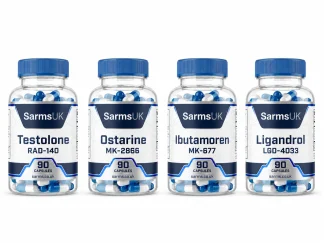
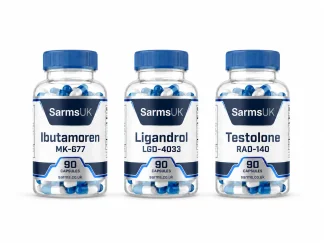
The MK-677 YK-11 stack combines YK-11 with MK-677 Ibutamoren, a growth hormone secretagogue. MK-677 does not interact with the androgen receptor and does not cause HPTA suppression, making it a theoretically complementary addition. The GH/IGF-1 elevation from MK-677 alongside YK-11’s myostatin inhibition targets two independent growth-limiting pathways.

YK-11 and Ostarine Stack

A combination pairing YK-11 with Ostarine MK-2866 for researchers interested in lean mass with connective tissue support. Ostarine’s well-characterised joint and bone benefits complement YK-11’s muscle-focused theoretical profile.

YK-11 and Cardarine Stack

Some research protocols pair YK-11 with Cardarine GW-501516 for a recomposition approach, combining YK-11’s anabolic potential with Cardarine’s PPARδ-mediated fat oxidation and endurance effects. Cardarine does not interact with the androgen receptor or cause HPTA suppression.

YK-11 for Women: Research Considerations

YK-11’s steroidal, DHT-derived structure makes it a poor candidate for female research models compared to non-steroidal SARMs. The partial androgen receptor agonism combined with a steroidal backbone carries a higher theoretical virilisation risk than compounds like Ostarine or Andarine, which are non-steroidal.

There is absolutely no published data on YK-11 in female subjects, whether animal or human. Researchers investigating SARMs for female applications would find substantially better evidence bases with Ostarine MK-2866 (Phase II/III human data) or Andarine S4 (preclinical data in ovariectomised rats).

Can YK-11 Be Used for Cutting?

YK-11 is not primarily associated with cutting research. Its theoretical profile (myostatin inhibition plus AR partial agonism) is more aligned with bulking and muscle growth beyond natural limits. Compounds like Andarine S4 or Cardarine GW-501516 have stronger research profiles for cutting and fat oxidation.

That said, some researchers investigate YK-11 for cutting to preserve lean mass during calorie restriction, on the theory that myostatin inhibition would protect against catabolic muscle loss. This is speculative, since the myostatin-inhibiting effect has not been confirmed in vivo. Researchers looking at YK-11 for cutting typically combine it with Cardarine or Andarine rather than using it standalone.

Who’s Researching YK-11?

  • Myostatin biology researchers using YK-11 as a tool compound for understanding follistatin-myostatin interactions and the role of myostatin inhibition in muscle growth regulation
  • Muscle hypertrophy researchers investigating compounds that theoretically allow growth past natural genetic ceilings imposed by the myostatin pathway
  • Androgen receptor pharmacology researchers studying the difference between full and partial AR agonism and what implications that distinction has for tissue selectivity
  • Bone density researchers building on the preliminary osteoblastic proliferation data from Kanno et al. (2013), though no in vivo confirmation exists
  • Comparative SARM researchers examining how steroidal and non-steroidal SARMs differ in their pharmacological profiles and therapeutic potential
  • Stack researchers combining YK-11 with RAD-140, LGD-4033, MK-677, or other compounds in multi-target protocols

Why Buy YK-11 from sarms.co.uk?

Purity You Can Verify

Every batch of YK-11 Myostine is independently tested via High-Performance Liquid Chromatography (HPLC) by accredited third-party laboratories. We publish full Certificates of Analysis for every batch. Download the PDF directly from this page and verify with the testing lab independently. Given YK-11’s unknown safety profile, purity verification is especially important.

Proper Concentration

5 mg per capsule, 90 capsules per bottle. No underdosed products, no proprietary blends, no ambiguity. You know exactly what you’re getting and can calculate research dosages with precision.

UK Manufactured

Compounded in GMP-certified UK facilities. Not imported from unregulated overseas laboratories. Raw materials are tested before compounding. Finished products are tested after compounding. Two-stage quality control with full documentation.

Capsules for Consistent Dosing

We sell YK-11 in capsule form for consistent per-dose accuracy. Given the compound’s short estimated half-life (6-10 hours) and the need for split dosing, capsules provide the most practical format for researchers who need repeatable measurements.

Free Next-Day UK Delivery

All orders ship free with next-day UK delivery. No minimum order, no hidden shipping fees.

Storage and Handling

  • Store at room temperature (15-25°C) in a cool, dry place
  • Keep away from direct sunlight and moisture
  • Keep the container tightly sealed after each use
  • Keep out of reach of children
  • Do not use past the expiry date printed on the label
  • Shelf life: 24 months when stored correctly

Frequently Asked Questions About YK-11

What is YK-11?

YK-11 (Myostine) is a steroidal selective androgen receptor modulator with myostatin-inhibiting properties, discovered by Yuichiro Kanno at Toho University in 2011. It has a DHT-derived backbone and acts as a partial AR agonist while also inducing follistatin expression. It is structurally and mechanistically distinct from non-steroidal SARMs.

Is YK-11 actually a SARM?

Technically debated. YK-11 has a steroidal backbone derived from DHT, making it structurally different from non-steroidal SARMs like RAD-140, Ostarine, or LGD-4033. It is often classified as a steroidal SARM, but some researchers categorise it as a myostatin inhibitor or a synthetic steroid with selective androgen receptor activity.

Does YK-11 inhibit myostatin?

In cell-based studies (C2C12 mouse muscle cells), YK-11 increased follistatin expression, which is a natural antagonist of myostatin. However, this YK-11 myostatin inhibition has only been demonstrated in vitro. No animal or human studies have confirmed whether this effect occurs in living organisms.

Is YK-11 safe?

The honest answer is that we do not know. There are no human safety studies, no animal toxicology data, and no published pharmacokinetic profiles for YK-11. The steroidal backbone raises theoretical concerns about hepatotoxicity and hormonal suppression, but these have not been tested. YK-11 has the largest evidence gap of any compound in this category.

What are the YK-11 side effects?

No YK-11 side effects have been documented in controlled studies because no such studies exist. Theoretical concerns include HPTA suppression (expected given the steroidal structure), potential hepatotoxicity, lipid profile changes, and hair loss risk from the DHT-derived backbone. All of these are inferred from the compound’s structure, not observed in research subjects.

Does YK-11 require PCT?

Given its steroidal structure and partial androgen receptor agonism, YK-11 likely causes HPTA suppression. Most researchers include PCT protocols. However, no clinical data exists to quantify the suppression level. The conservative approach is to treat YK-11 more like a mild steroid than a non-steroidal SARM for PCT planning.

What is the YK-11 half-life?

The YK-11 half-life is estimated at approximately 6-10 hours based on structural analysis. This has not been measured in any animal or human pharmacokinetic study. The short estimated half-life is why split dosing (twice daily) is commonly referenced in research protocols.

What is the recommended YK-11 dosage?

There is no clinically established YK-11 dosage. The commonly referenced research range is 5-10 mg per day, but this has no published basis from controlled studies. Without animal or human dose-response data, all dosage references are anecdotal.

Can you stack YK-11 with RAD-140?

The YK-11 RAD-140 stack is one of the most frequently discussed research combinations, pairing YK-11’s theoretical myostatin inhibition with RAD-140’s potent anabolic activity. Both compounds are expected to cause HPTA suppression, which compounds the hormonal impact of the stack.

Is YK-11 legal in the UK?

YK-11 is legal to purchase in the UK for research purposes. It is not approved for human consumption by the MHRA. It is on WADA’s prohibited list and cannot be used in competitive sport.

What is the difference between YK-11 and other SARMs?

YK-11 differs from other SARMs in three fundamental ways: it has a steroidal structure (other SARMs are non-steroidal), it acts as a partial rather than full androgen receptor agonist, and it has a myostatin-inhibiting mechanism via follistatin induction that no other SARM possesses. It also has the weakest evidence base, with only two in vitro cell studies and no animal or human data.

Does YK-11 work for bulking?

YK-11’s theoretical mechanism (myostatin inhibition combined with AR partial agonism) is most aligned with bulking research. The myostatin pathway is the body’s primary limiter on muscle growth, so inhibiting it could theoretically allow muscle accumulation beyond natural genetic limits. However, this has only been demonstrated in cell cultures. No in vivo muscle growth data exists for YK-11.

Related SARMs and Research Compounds

  • RAD-140 Testolone – a potent non-steroidal SARM with a 90:1 anabolic-to-androgenic ratio. The YK-11 vs RAD-140 comparison is one of the most common in SARM research communities
  • LGD-4033 Ligandrol – the only SARM with Phase I human trial data showing measurable lean mass gains. Frequently compared to YK-11 for bulking research
  • MK-2866 Ostarine (Enobosarm) – the most clinically studied SARM, with Phase II and III human trial data. A lower-risk alternative for researchers who prioritise evidence quality
  • MK-677 Ibutamoren – a growth hormone secretagogue commonly stacked with YK-11 for recovery and GH/IGF-1 axis support without additional HPTA suppression
  • Cardarine GW-501516 (Endurobol) – a PPARδ agonist sometimes paired with YK-11 in recomposition research protocols
  • Andarine S4 – a non-steroidal SARM with preclinical fat oxidation data, commonly studied for cutting rather than YK-11’s bulking profile
  • SR-9009 Stenabolic – a Rev-Erbα agonist studied for metabolic and circadian rhythm effects
  • ACP-105 – a less-studied non-steroidal SARM with limited published data

References and Further Reading

  • Kanno Y, et al. (2011). “Selective androgen receptor modulator, YK11, regulates myogenic differentiation of C2C12 myoblasts by follistatin expression.” Biological and Pharmaceutical Bulletin, 34(4), 523-527. PMID: 21372378
  • Kanno Y, et al. (2013). “Selective androgen receptor modulator, YK11, up-regulates osteoblastic proliferation and differentiation in MC3T3-E1 cells.” Biological and Pharmaceutical Bulletin, 36(9), 1554-1556. PMID: 23995658

Disclaimers

  • YK-11 (Myostine) is sold strictly for laboratory and research purposes only
  • This product is not intended for human consumption
  • YK-11 is not a medicine, supplement, or food product
  • No human clinical trials, animal studies, or safety data exist for this compound
  • YK-11 has the largest evidence gap of any SARM-category compound we sell
  • Not suitable for individuals under 18 years of age
  • Pregnant or breastfeeding women must not handle this compound
  • Researchers should consult qualified professionals and adhere to all applicable regulations
  • sarms.co.uk does not provide medical advice and makes no claims regarding therapeutic outcomes
  • We are not responsible for any adverse effects resulting from misuse of this product
  • The content on this page does not constitute medical advice

Content last reviewed: 17 February 2026

Weight 4.2 kg
Dimensions 1 × 2 × 3 cm

Reviews

There are no reviews yet

Be the first to review “Myostine YK-11”