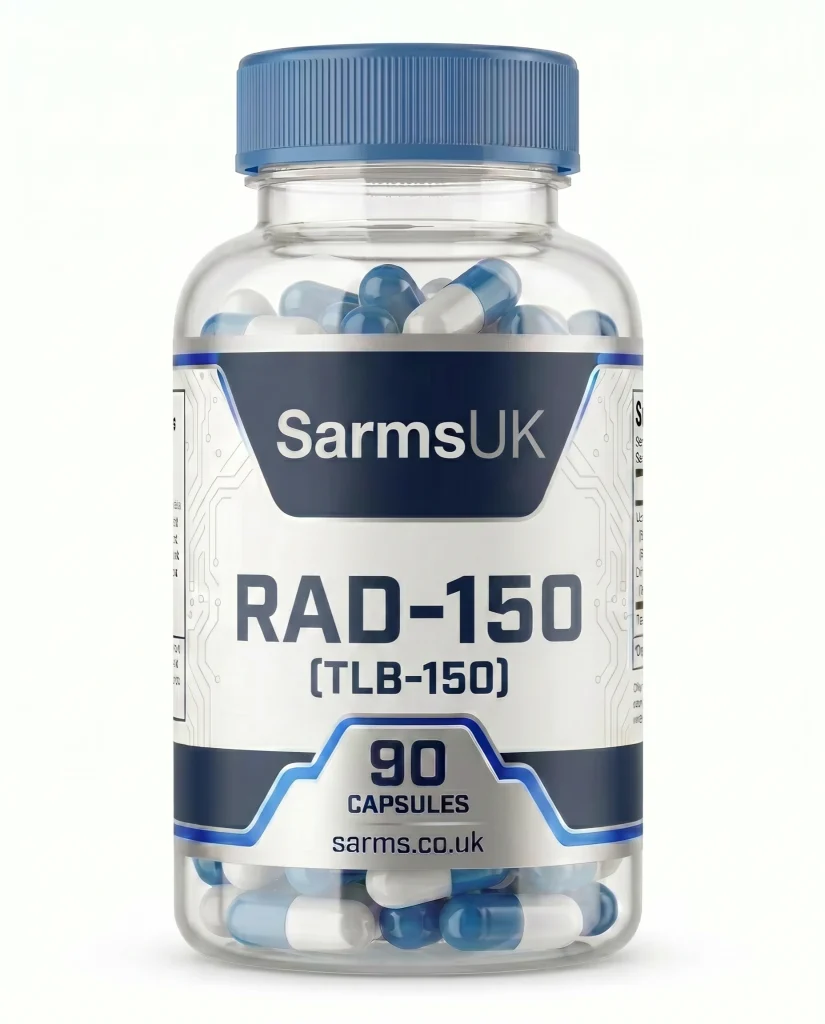
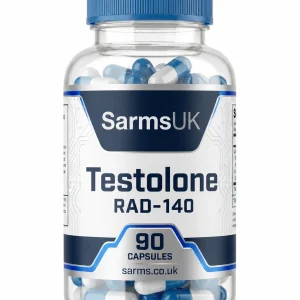
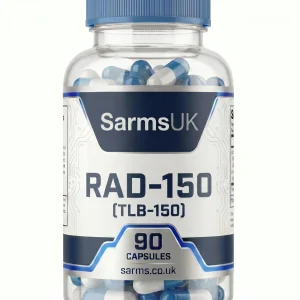
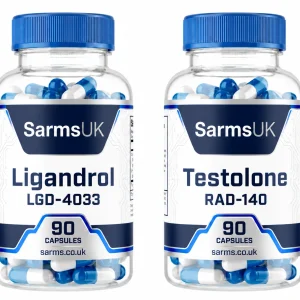
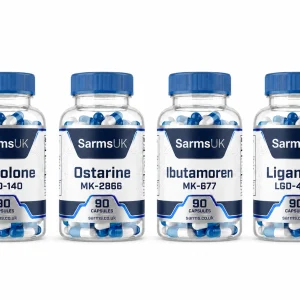
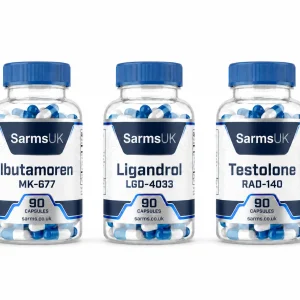
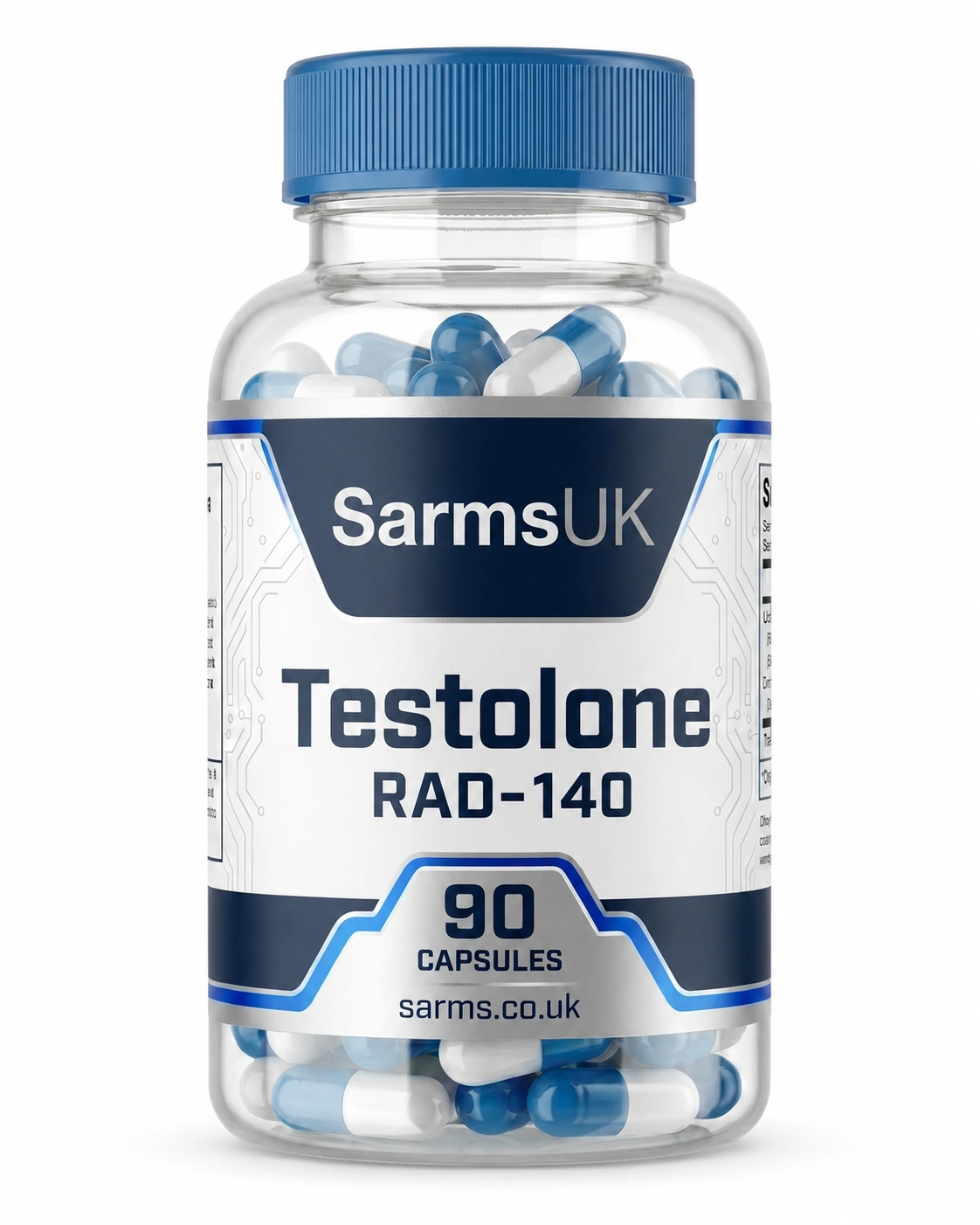
Testolone RAD-140

  • Research-grade selective androgen receptor modulator (SARM)
  • 99%+ purity — independently HPLC tested
  • ~90:1 anabolic-to-androgenic ratio (preclinical data)
  • Tissue-selective: targets muscle and bone, spares prostate
  • Free next-day UK delivery & international shipping
  • Manufactured in a GMP-certified UK facility
  • Certificate of Analysis included

£49.99

Buy Now
Compare
Categories: , Brand:

What Is RAD-140 (Testolone)?

RAD-140, known in research circles as Testolone, is one of the most potent selective androgen receptor modulators (SARMs) available for research. Originally developed by Radius Health Inc. for muscle wasting and breast cancer research, RAD-140 is now one of the most widely studied SARMs in the UK and worldwide.

If you’re looking to buy RAD-140 in the UK, sarms.co.uk is a trusted RAD-140 supplier with 99%+ HPLC-verified purity on every batch. We publish full Certificates of Analysis, manufacture in GMP-certified UK facilities, and include free next-day delivery on all Testolone orders. Whether you’re searching for RAD-140 for sale UK, Testolone capsules, or the best place to buy RAD-140 online in the UK, our independently tested RAD-140 meets the highest quality standard available.

Unlike traditional anabolic steroids that carpet-bomb every androgen receptor in the body, RAD-140 is tissue-selective. It binds to androgen receptors in skeletal muscle and bone tissue while largely sparing the prostate, liver, and sebaceous glands. That selectivity is the entire point: anabolic activity where you want it, minimal androgenic interference where you don’t.

In preclinical models, RAD-140 has demonstrated one of the highest anabolic-to-androgenic ratios of any SARM studied to date, with an estimated ratio of approximately 90:1 compared to testosterone’s 1:1 (Miller et al., 2011, ACS Medicinal Chemistry Letters).

Compound Profile

Chemical Name 2-Chloro-4-[[(1R,2S)-1-[5-(4-cyanophenyl)-1,3,4-oxadiazol-2-yl]-2-hydroxypropyl]amino]-3-methylbenzonitrile
CAS Number 1182367-47-0
Molecular Formula C₂₀H₁₆ClN₅O₂
Molecular Weight 393.83 g/mol
Half-Life ~60 hours (estimated from preclinical data)
Solubility PEG-300 / DMSO
Classification Non-steroidal SARM
PubChem CID 44200882

How Does RAD-140 (Testolone) Work?

RAD-140 works by selectively binding to androgen receptors (ARs) in muscle and bone tissue. Once bound, it triggers a conformational change in the receptor that promotes anabolic gene expression, the cellular machinery responsible for protein synthesis, nitrogen retention, and muscle fibre recruitment.

Here’s what makes it different from testosterone or synthetic steroids:

1. No Aromatisation

RAD-140 does not convert to oestrogen via the aromatase enzyme. In research settings, this means no oestrogen-related complications. No water retention, no gynecomastia risk at the compound level.

2. Tissue Selectivity

Preclinical data shows RAD-140 stimulates muscle and bone tissue growth without significant action on the prostate gland. A 2010 study by Radius Health found that RAD-140 increased lean body mass in primates at doses that produced no measurable prostate enlargement.

3. Neuroprotective Properties

Research published in Endocrinology (Jayaraman et al., 2014) demonstrated that RAD-140 was neuroprotective in cultured hippocampal neurons and in kainate-lesioned male rats, providing protection against cell death through MAPK/ERK signalling pathways. The researchers noted RAD-140 was “as effective as testosterone in reducing cell death induced by apoptotic insults.”

4. Partial Agonist Activity

RAD-140 appears to act as a partial agonist in some tissues, meaning it can actually compete with testosterone at the receptor level in high-androgen environments, a mechanism being explored in breast cancer research.

What Does the Research Say?

We don’t do hype. Here’s what the published literature actually shows:

Lean Mass & Strength

In a 28-day primate study (cynomolgus monkeys), RAD-140 administration resulted in a mean lean body mass increase of greater than 10% at a dose of just 0.1 mg/kg, with no significant change in prostate weight or liver enzyme markers (Radius Health, Inc., preclinical data, 2011).

Neuroprotection

Jayaraman et al. (2014) showed RAD-140 reduced hippocampal neuron death caused by beta-amyloid peptide and kainate excitotoxicity. This is relevant to Alzheimer’s disease research, where androgen decline is considered a risk factor.

Sarcopenia Research

A 2023 study in Clinical and Experimental Pharmacology and Physiology (PMID: 37758180) investigated RAD-140 in ageing female mice over 10 weeks. Importantly, the researchers found that at 5 mg/kg dosing, RAD-140 increased frailty markers, suggesting that dosage and duration are critical variables. The study concluded that “moderate dosages are likely to be more effective” and that megadoses fail to induce anabolism.

What This Means in Plain English

The science consistently shows RAD-140 has real anabolic potential in muscle tissue, genuine neuroprotective effects, and tissue selectivity. But it also shows that more is not more. Dosage protocol matters enormously.

⚠️ Important: No human clinical trials for RAD-140 have been completed to date. All data referenced is from preclinical (animal/in vitro) studies. This compound is sold for research purposes only.

RAD-140 vs. Testosterone vs. Anabolic Steroids

If you’re researching RAD-140, you’re probably comparing it to traditional androgens. Here’s how they stack up based on available preclinical evidence:

Factor RAD-140 Testosterone Anabolic Steroids
Anabolic activity High (tissue-selective) High (systemic) High (systemic)
Androgenic activity Minimal High High
Aromatisation (→ oestrogen) None Yes Compound-dependent
Prostate impact Minimal in preclinical models Significant Significant
Hepatotoxicity Not observed at research doses Low (injectable) / Moderate (oral) Often significant (oral)
Neuroprotection Demonstrated in preclinical Yes (via AR activation) Varies
HPTA suppression Likely dose-dependent Yes Yes
Human clinical data None completed Extensive Extensive

The honest take: RAD-140 looks promising on paper: high anabolic ratio, tissue selectivity, neuroprotection. But it lacks the decades of human clinical data that testosterone has. Any researcher working with this compound should understand they’re operating on preclinical evidence.

RAD-140 Dosage & Cycle Length (Research Use Only)

Based on available preclinical data and commonly referenced research protocols:

  • Standard research dosage: 10–20 mg per day
  • Estimated half-life: ~60 hours, supporting once-daily administration
  • Typical research cycle length: 8–12 weeks in preclinical models
  • Administration: Oral liquid. Measure with the included graduated dropper

A note on dosing: The 2023 Brown et al. study showed that excessive dosing (5 mg/kg in mice, a high relative dose) failed to produce additional anabolic benefit and increased frailty markers. More is not better. Precision dosing based on body composition and research objectives is essential.

Who’s Researching RAD-140 (Testolone) and Why?

  • Sarcopenia and muscle wasting: as a potential alternative to testosterone replacement therapy (TRT) in age-related muscle loss
  • Breast cancer: Radius Health explored RAD-140 as a potential treatment for AR+/ER+ breast cancer
  • Neurodegenerative disease: neuroprotective properties make RAD-140 (Testolone) a candidate for Alzheimer’s and cognitive decline research
  • Hormone replacement alternatives: researchers are investigating SARMs like Testolone as potential TRT alternatives with fewer systemic effects
  • Body composition studies: exploring lean mass accrual, fat oxidation, and RAD-140’s effects on body recomposition
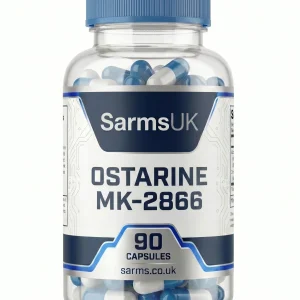
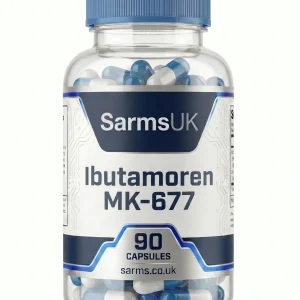
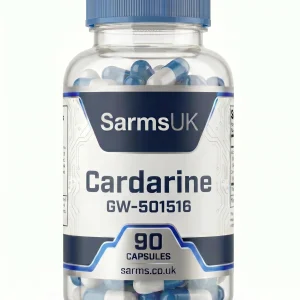
  • RAD-140 stacking protocols: commonly studied alongside MK-677 (Ibutamoren) and Cardarine (GW-501516) for synergistic research

Why Buy RAD-140 (Testolone) in the UK from sarms.co.uk?

Purity You Can Verify

Every batch is independently tested via High-Performance Liquid Chromatography (HPLC) by third-party laboratories. We publish full Certificates of Analysis. Download the PDF directly from this page and verify with the testing lab if you want.

Proper Concentration

No underdosed nonsense. No proprietary blends. You know exactly what’s in the bottle.

UK Manufactured

Compounded in GMP-certified facilities. Not imported from unregulated overseas labs.

Transparent Supply Chain

We test raw materials before compounding. We test the finished product after compounding. Two tests, two stages, full documentation.

Storage & Handling

  • Store at room temperature (15–25°C) in a cool, dry place
  • Keep away from direct sunlight and moisture
  • Seal the dropper cap tightly after each use
  • Keep out of reach of children
  • Do not use past the expiry date printed on the label
  • Shelf life: 24 months when stored correctly

RAD-140 (Testolone): Frequently Asked Questions

Is RAD-140 legal in the UK?

RAD-140 is legal to purchase in the UK for research purposes. It is not approved for human consumption by the MHRA and is not a licensed medicine. It is listed on WADA’s prohibited substances list for competitive athletes.

Does RAD-140 require post-cycle therapy (PCT)?

Preclinical evidence suggests RAD-140 may cause dose-dependent suppression of the hypothalamic-pituitary-testicular axis (HPTA). Researchers commonly include PCT protocols (such as enclomiphene citrate or tamoxifen) following research cycles.

What’s the difference between RAD-140 and Ostarine (MK-2866)?

Both are SARMs, but RAD-140 has a significantly higher anabolic-to-androgenic ratio (~90:1 vs ~3:1 for Ostarine). RAD-140 is generally considered more potent for lean mass research, while Ostarine is studied more for joint and bone health applications.

How do I verify your purity claims?

Download our Certificate of Analysis from the link at the top of this page. Contact the testing laboratory directly. Their details are on the report. We encourage independent verification.

Can I stack RAD-140 with other compounds?

Researchers commonly study RAD-140 alongside MK-677 (Ibutamoren) for synergistic lean mass and recovery protocols.

What is the recommended research dosage for RAD-140?

Based on available preclinical data, standard research protocols reference 10–20 mg per day. RAD-140 has an estimated half-life of approximately 60 hours, supporting once-daily administration. A 2023 study by Brown et al. demonstrated that excessive dosing failed to produce additional anabolic benefit.

What is RAD-140’s anabolic-to-androgenic ratio?

Preclinical data from Radius Health Inc. (Miller et al., 2011) estimated RAD-140’s anabolic-to-androgenic ratio at approximately 90:1, compared to testosterone’s 1:1 ratio. This tissue selectivity means anabolic activity in muscle and bone with minimal androgenic effects in other tissues.

Where can I buy RAD-140 (Testolone) in the UK?

You can buy RAD-140 directly from sarms.co.uk. We are a UK-based SARMs supplier offering HPLC-tested, research-grade Testolone with free next-day delivery. Every batch comes with a downloadable Certificate of Analysis.

What is the RAD-140 price in the UK?

RAD-140 (Testolone) pricing varies by concentration and volume. At sarms.co.uk, we offer competitive UK pricing with no hidden fees. Check the product options above for current pricing. All orders include free next-day UK delivery.

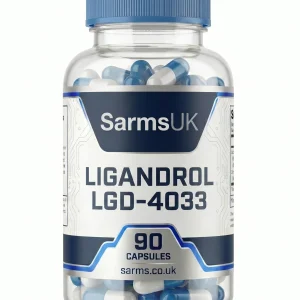
RAD-140 vs LGD-4033 (Ligandrol): what’s the difference?

Both are popular SARMs, but they differ in potency and selectivity. RAD-140 has a higher anabolic-to-androgenic ratio (~90:1 vs ~10:1 for LGD-4033) and shows stronger tissue selectivity in preclinical models. LGD-4033 is more commonly studied for bone density and joint health, while RAD-140 (Testolone) is studied primarily for lean mass and neuroprotection.

Is RAD-140 the same as Testolone?

Yes. RAD-140 and Testolone are the same compound. RAD-140 is the research designation assigned by Radius Health Inc., while Testolone is the more commonly used name. The compound is also referenced by CAS number 1182367-47-0.

References & Further Reading

  1. Miller CP, et al. (2011). “Design, Synthesis, and Preclinical Characterization of the Selective Androgen Receptor Modulator (SARM) RAD140.” ACS Medicinal Chemistry Letters, 2(2), 124–129. DOI: 10.1021/ml1002508
  2. Jayaraman A, et al. (2014). “Selective androgen receptor modulator RAD140 is neuroprotective in cultured neurons and kainate-lesioned male rats.” Endocrinology, 155(4), 1398–1406. PMID: 24428527
  3. Brown AM, et al. (2023). “RAD140 (Testolone) negatively impacts skeletal muscle adaptation, frailty status and mortality risk in female mice.” Clinical and Experimental Pharmacology and Physiology, 50(12), 973–983. PMID: 37758180
  4. Narayanan R, et al. (2018). “Selective Androgen Receptor Modulators (SARMs) as Function Promoting Therapies.” Current Opinion in Clinical Nutrition and Metabolic Care, 21(3), 233–237. PMID: 29528862

Related SARMs & Research Compounds

Exploring other research compounds? Browse our full range of UK SARMs:

All products are HPLC-tested with published COAs. View our full SARMs catalogue.

Disclaimers

  • RAD-140 is sold strictly for laboratory and research purposes only
  • This product is not intended for human consumption
  • RAD-140 is not a medicine, supplement, or food product
  • Not suitable for individuals under 18 years of age
  • Pregnant or breastfeeding women must not handle this compound
  • Researchers should consult qualified professionals and adhere to all applicable regulations
  • sarms.co.uk does not provide medical advice and makes no claims regarding therapeutic outcomes
  • We are not responsible for any adverse effects resulting from misuse of this product
  • Results referenced are from preclinical studies and may not translate to human outcomes
  • The content on this page does not constitute medical advice

Content last reviewed: 17 February 2026

Weight 4.2 kg
Dimensions 1 × 2 × 3 cm

Reviews

There are no reviews yet

Be the first to review “Testolone RAD-140”